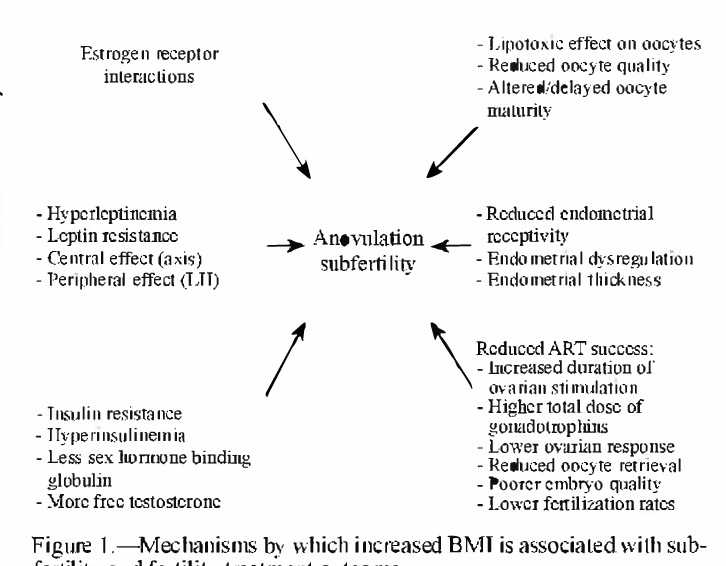
Background An increased body mass index (BMI) can lead to subfertility; however, current literature fails to exclude the effect of other confounding medical conditions, raising questions regarding the direct link between increased BMI and fertility outcomes.
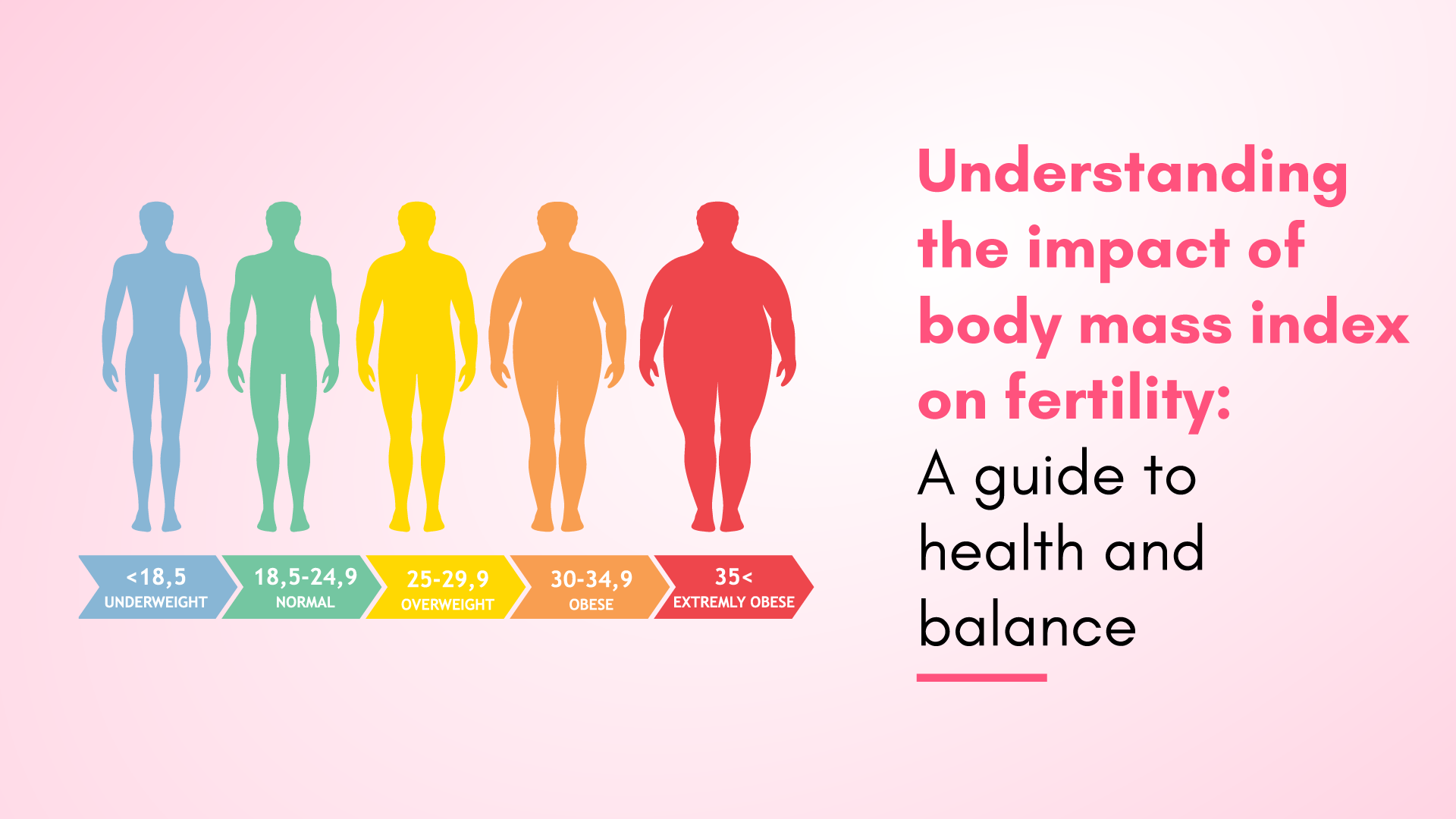
BMI, or body mass index, is a formula that relates weight and height to classify body status: underweight, normal weight, overweight or obese.In women who are underweight or have a BMI <18.5, the following are observed: Anovulation or irregular cycles.
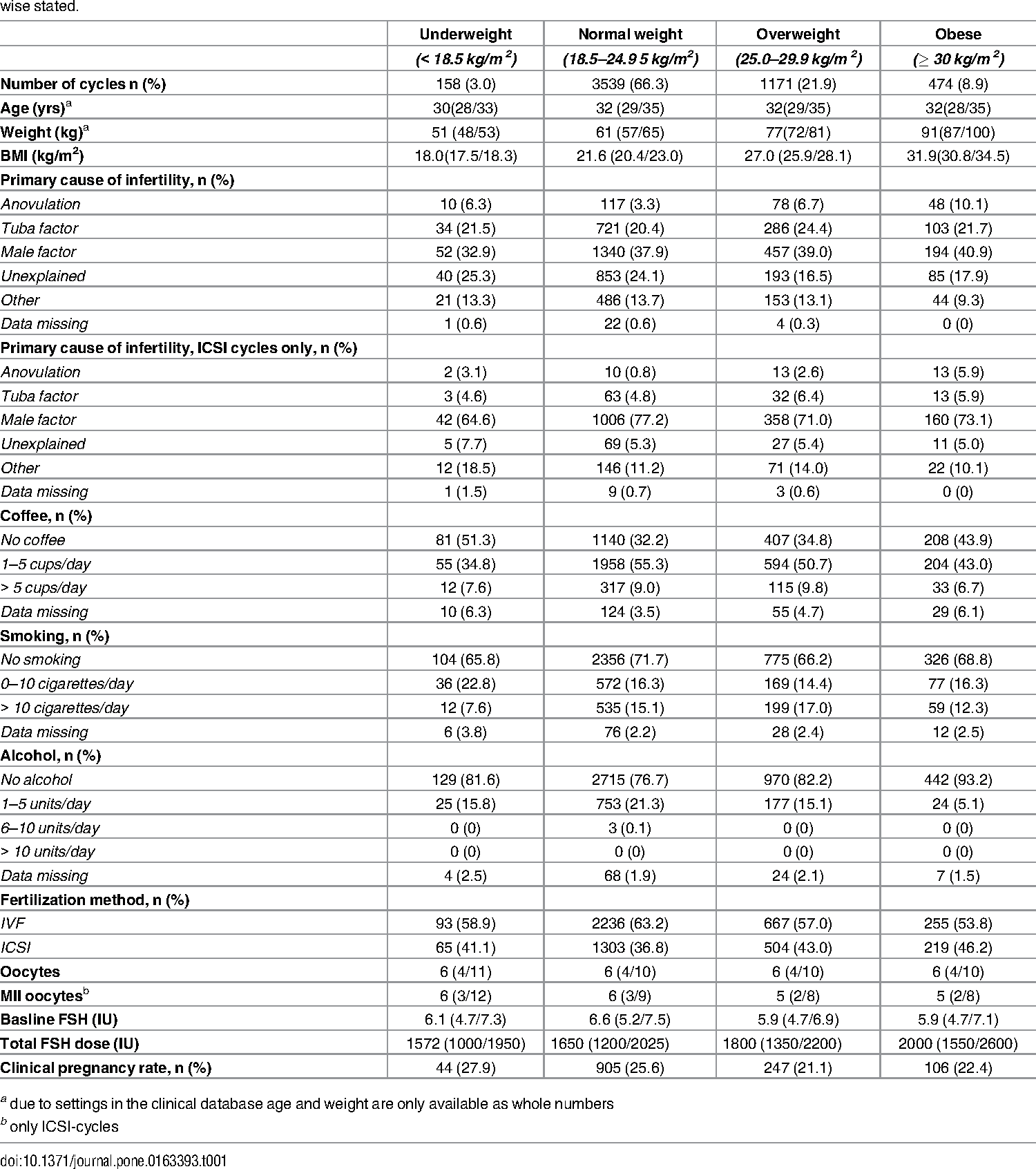
Body mass index has been identified as one factor that can affect ovarian response however; there is no consensus about its impact outcome. Objectives: To determine the effect of body mass index (BMI) on ovarian response in an Invitro fertilization cycle.

Body mass index (BMI) is a measure of body fat based on weight and height.Women with a BMI over 30 are 42% less likely to conceive through IVF. Maintaining a healthy weight and body fat percentage is essential for optimal fertility.
Body mass index and menstrual irregularity in a prospective cohort study of smartphone application users. Shiori Itoi. Makiko Sampei. Naho Morisaki.Medical therapy to treat obesity and optimize fertility in women of reproductive age: a narrative review.
BMI categories (underweight, normal, overweight, obese) indicate potential health risks based on weight relative to height. The Impact of BMI on Reproductive Hormones and Its Link to Fertility. BMI significantly influences reproductive hormones, affecting fertility in both men and women.
However, Dr. Boots cautions, BMI is not the only factor affecting fertility in women with PCOS. Most women with PCOS have some insulin resistance, and that may play a role in ovulation and an ability to conceive apart from BMI, she notes.
BMI, Body Mass Index, nutrition, obesity, reproduction.In women, high BMI leads to earlier onset of the puberty and abnormalities in menstrual cycle. In obese girls and women, some methods of oral contraception are less effective, also exposing them to greater risk for thrombosis.